Step 6 of 20 · Act 1 · Why revolution happened
The financial crisis
A rich country that could not pay its bills
The financial crisis was political and structural, not just overspending: the monarchy could not tax France's wealth because privilege and resistance blocked reform.
Here is one of the strangest facts about the Revolution: France was a wealthy country, yet by the late 1780s the monarchy was close to financial collapse. How can both be true?
The answer is not simply that the royal family spent too much on luxury. The real problem was structural. The state could not tax France's wealth effectively, because the wealthiest groups — the clergy and nobility — were largely exempt, and because privilege, regional differences, and political resistance blocked every attempt at reform.
On top of this came debt. France had fought expensive wars, most recently helping the American colonies win independence from Britain. These wars were paid for with borrowed money. By the late 1780s, a huge share of the government's spending went simply on paying interest on its debts.
Ministers understood the problem. One after another — Turgot, Necker, then Calonne — proposed reforms, above all a fairer tax that the privileged would also pay. And one after another, they were defeated by resistance from the parlements and the privileged orders, who refused to give up their exemptions.
The king was trapped. He could not tax, could not reform, and could not pay. In desperation, he agreed to summon the Estates-General for the first time in 175 years. In trying to save the monarchy's finances, he opened the door to revolution.
What matters here
France was rich but its government was broke, because it could not tax the wealthy and was buried in war debt. When reform was blocked, the king had to call the Estates-General — the spark of revolution.
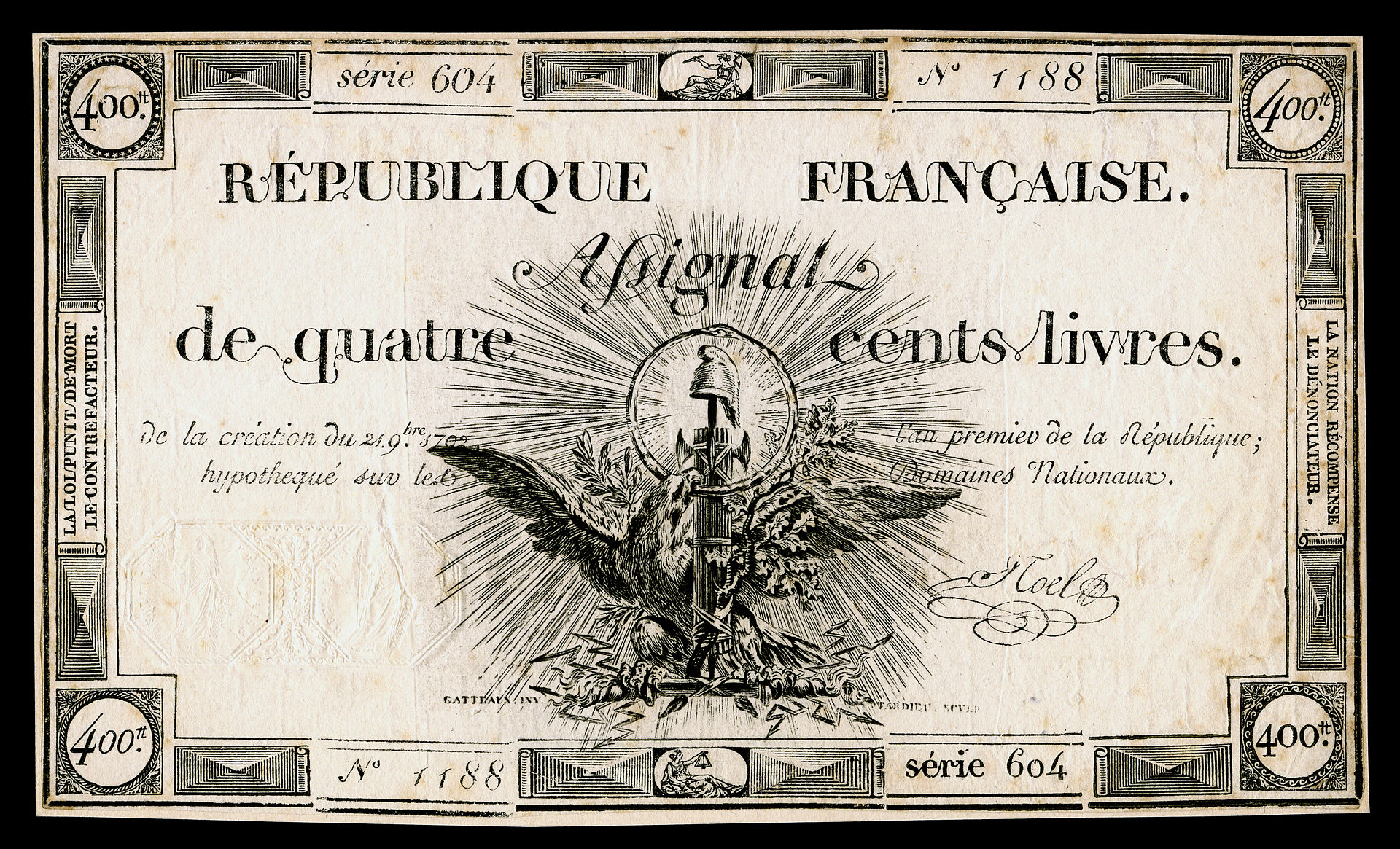
Historical source
One answer to the debt crisis: assignats — paper money backed by land seized from the Church.
Assignat of 400 livres — French Republic (revolutionary paper money), 1792.
Public domain · Wikimedia Commons
Misconception check
“France went bankrupt simply because the royal family spent too much money on luxury.”
Cause chain
- 1
Long-term pressure
An unequal tax system in which the wealthy were largely exempt
- 2
Immediate crisis
War debt and a growing deficit the state could not cover
- 3
Failed response
Reform blocked by the parlements and privileged orders defending their exemptions
- 4
Revolutionary action
The king forced to summon the Estates-General for the first time since 1614
- 5
Consequence
A struggle over political authority — the opening of the Revolution
Writing builder
Write one paragraph explaining why the financial crisis is better described as a political problem than as simple overspending. Use: Claim, Evidence, Explanation, Link to the question.