Step 9 of 20 · Act 2 · What changed
The Declaration of the Rights of Man
New principles — and their limits
The Declaration proclaimed universal rights and equality before the law — but in practice those rights were limited by wealth, sex, and slavery.
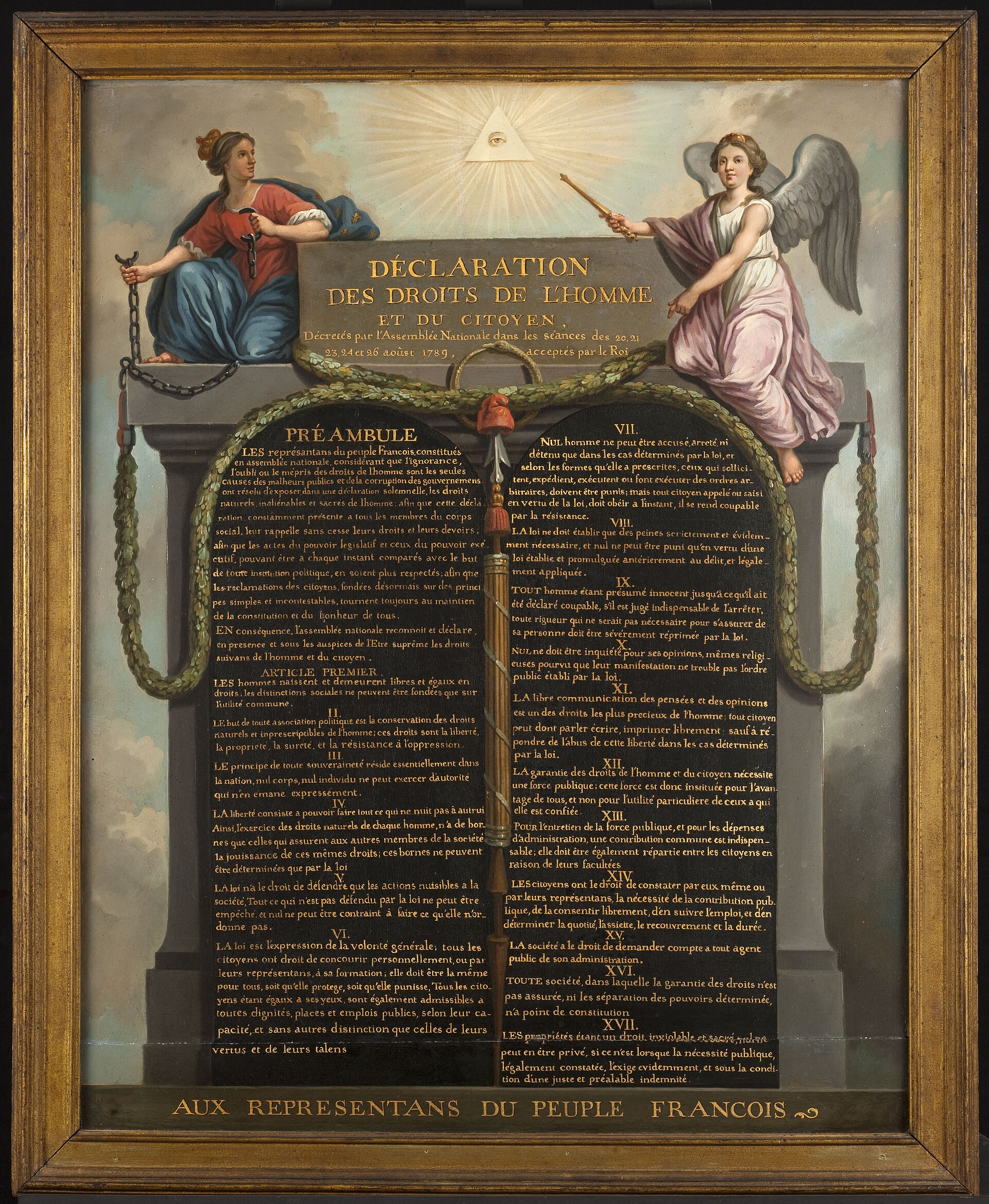
Late in August 1789, the Assembly issued one of the most influential documents in modern history: the Declaration of the Rights of Man and of the CitizenThe 1789 statement of principles proclaiming natural rights and equality before the law..
Its claims were bold and universal. Men are born and remain free and equal in rights. Government exists to protect natural rights — liberty, property, security, and resistance to oppression. The law is the expression of the general willThe idea that law should express the shared will of the whole people, applying equally to all., the same for everyone, whether it protects or punishes. People have rights to free speech and a fair trial. These ideas, drawn from the EnlightenmentAn 18th-century movement of thinkers who argued that reason, rights, and liberty should shape government and society., still echo in constitutions and human-rights charters today.
Yet the Declaration's promise was not fully kept. Its language spoke of "man and citizen", and in practice full political rights were tied to wealth: only men who paid enough tax — "active citizens" — could vote. Women were excluded from these political rights altogether. And slavery continued in France's colonies, despite the ringing words about liberty.
The Declaration was therefore both a genuine turning point and an unfinished one: it set a standard of universal rights that reality did not yet match — a gap that would drive arguments for generations.
What matters here
It set a lasting standard: free and equal rights, law as the general will. Its limits — wealth-based voting, the exclusion of women, continued slavery — show the gap between principle and practice.
Historical source
The Declaration shown as sacred tablets under the eye of reason — Enlightenment ideals given the weight of scripture.
Declaration of the Rights of Man and of the Citizen — Jean-Jacques-François Le Barbier, 1789.
Public domain · Wikimedia Commons
Misconception check
“The Declaration of Rights immediately gave equal rights to everyone in France.”
Writing builder
Write one paragraph on the Declaration of the Rights of Man — what it promised and how far it reached. Use: Claim, Evidence, Explanation, Link to the question.