Step 17 of 20 · Act 3 · Why it mattered
Rights, citizenship, and sovereignty
Resonant: ideas that outlived the Revolution
Rights, citizenship, and popular sovereignty proved deeply Resonant — later generations reached for them, making them lasting standards for judging any government.
Some of the Revolution's most powerful effects were not laws or governments, but ideas — and ideas that people still connect with are strongly Resonant, one of the surest signs of significance.
Three ideas mattered most. First, rights: the claim that people have rights simply as human beings, which no government may justly ignore. Second, citizenship: the shift from being a subjectA person under the authority of a monarch, owing obedience rather than holding political power., who obeys a ruler, to being a citizenA member of a nation who shares in its political life and rights — contrasted with a 'subject', who merely obeys a ruler., who belongs to a nation and shares in its power. Third, popular sovereignty: the principle that authority rises from the people, not down from a king or from God.
These ideas did not die when the Revolution ended. The Declaration of the Rights of Man became a permanent reference point — it is still part of France's constitution today — and its language echoed through later struggles for rights across the world. Even people the Revolution had excluded used its own words to demand inclusion.
That is what it means for an idea to resonate: it outgrows the moment that produced it, and later people reach for it as their own. The Revolution did not perfectly deliver rights, citizenship, or sovereignty. But it made them the standard by which governments would be judged from then on.
What matters here
The shift from subject to citizen, and the claims that power comes from the people and that all humans have rights, still resonate — used again and again in later struggles for rights.
Historical source
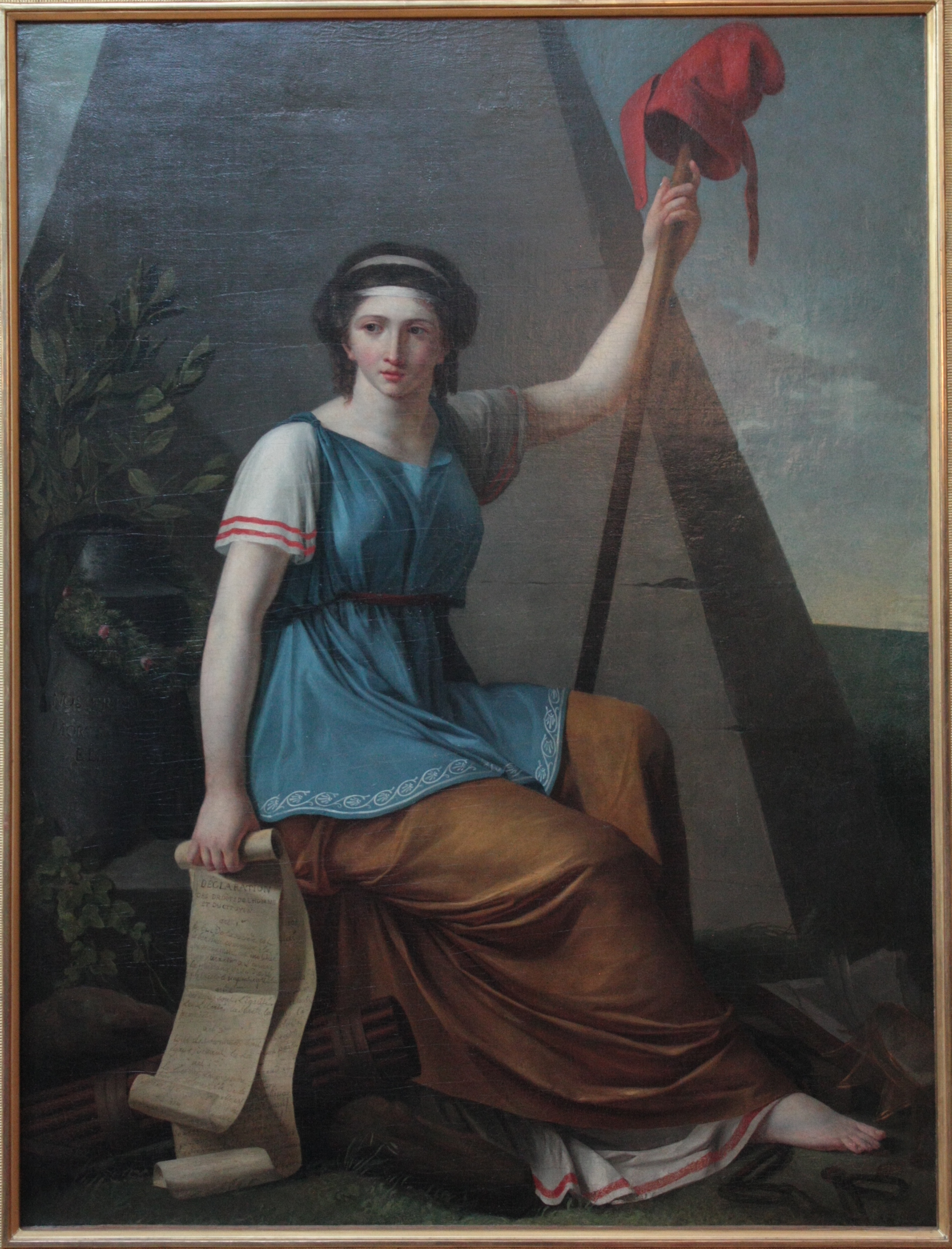
Liberty personified (1794) — one of the era's rare surviving revolutionary allegories, painted by a woman.
Liberty (La Liberté) — Nanine Vallain, 1794.
Public domain · Wikimedia Commons
Misconception check
“Once the Revolution ended, its ideas about rights and citizenship simply disappeared.”
Writing builder
Write one paragraph on why the Revolution's ideas about rights and citizenship are historically significant. Use: Claim, Evidence, Explanation, Link to the question.