Step 3 of 20 · Act 1 · Why revolution happened
The Three Estates
One society, divided into three legal orders
French society was legally divided into three estates, and the Third Estate — about 97% of people — contained the rich as well as the poor.
French society was legally divided into three groups, called estates or orders. Your estate was usually decided at birth, and it shaped your rights and duties for life.
The First Estate was the clergyThe priests, bishops, and monks of the Church — the First Estate. — the priests, bishops, and monks of the Catholic Church. The Second Estate was the nobility. Together these two estates made up only a small share of the population, perhaps two or three in every hundred people.
Everyone else — around 97% of France — belonged to the Third Estate. It is easy to imagine this as "the poor", but that is misleading. The Third Estate was enormous and mixed. It included wealthy bankers, merchants, and lawyers, alongside shopkeepers, craftspeople, city workers, and the millions of peasants who farmed the land. A rich Paris lawyer and a struggling village labourer were, in law, members of the same estate.
This mattered because status, not wealth, set the rules. A poor noble still enjoyed the legal advantages of the Second Estate. A rich merchant in the Third Estate did not. As education spread and the economy grew, more and more successful people in the Third Estate began to ask a sharp question: why should birth, rather than talent or contribution, decide a person's place?
What matters here
Status was set by birth, not wealth. The huge, mixed Third Estate included successful, educated people who increasingly resented being shut out by the accident of their birth.
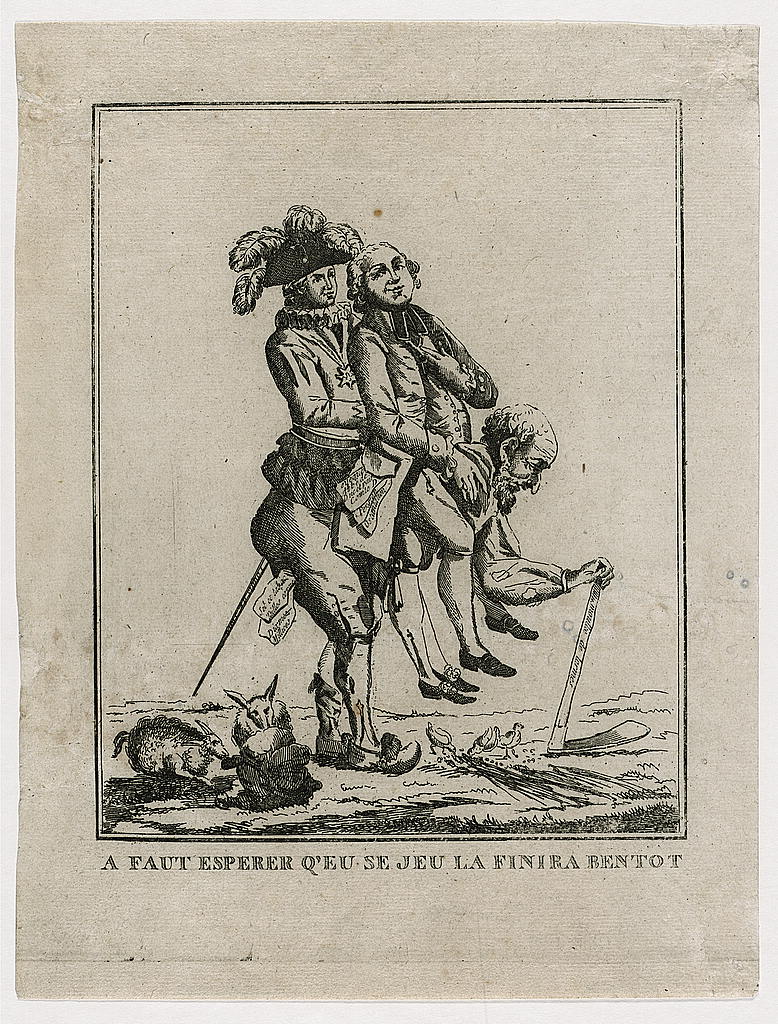
Historical source
Revolutionary caricature: the Third Estate carries the clergy and nobility on its back — privilege made visible.
"À faut espérer q'eu jeu la finira bentôt" (Let us hope this game ends soon) — Anonymous print, 1789.
Public domain · Wikimedia Commons
Misconception check
“The Third Estate was made up only of poor people.”